Sunday, 20 May 2012

Is it a tufted duck or a pochard?

 Hybrid flies over for some food

I spotted an unusual hybrid mingling with my regulars recently but thought I might have been seeing things as it was getting dark and the duck flew off almost as soon as I noticed it.  It looked quite unusual, so I did some research on the internet and found that red-crested pochards and tufted ducks have been known to inter-breed.  I also saw on the internet an image of the hybrid I'd spotted, or one just like it, that had been photographed in Busy Park over a year ago.  Earlier this week the hybrid was outside the house again and was more than happy to mingle with the other ducks while I was feeding them.

 Close up of hybrid photographed by John Inglis

John Inglis of  Garrick's Ait sent me the above image of the hybrid and very kindly offered to let me use it in my blog.  He, too, had noticed the unusual bird and, knowing of my interest in local wildlife, had contacted me with a picture of the duck in case I hadn't seen it.

 Red-crested pochard and hybrid tufted duck together

While the birds were feeding I was able to observe the similarities between the two ducks.  The tufted hybrid has a red head similar to that of the pochard but only on the top of the head.  Its face is a dark metallic green and it's body is that of a normal tufted duck.  Its bill has a red line around the tip.


 HB leaves her nest

HB is back and has opted for a hanging basket again as her chosen nest site.  She wasn't happy with the state of her hanging basket earlier in the season and opted to nest in a duck box on the top deck.  For some reason her eggs didn't hatch and she has now decided to try a hanging basket again for her second attempt.  As the original basket wasn't fit for purpose I bought a new one but, when she flew into it we thought it would be too cramped for her and all the eggs.  Dave decided to line her old basket for her and we put the old one back in its original spot and placed the new facing the garden.  What do we know about ducks preferences!  She rejected the renovated basket and opted for the new one and the new location and now has seven eggs.

 Watch the video of HB

HB leaves the nest

She seems very happy in her new location and is able to see when it's safe for her to come down for a quick drink, snack and a wash.  We've decided that it's actually safer for her where she is as her comings and goings are less obvious to many of the rogue males hanging around on the river with nothing better to do than chase any female that is unwary enough to get caught.

HB heads back to the nest after a quick breakfast

Another advantage to HB's new nest site is the fact that it's not right next to our day boat.  Whenever we wanted to go out on deck or use the boat we had to remember that she was just above our heads and do our best not to distress her by making too much noise or by getting too close to her.  Now, she gets more peace and quiet but keeps an eye on us when we're near the kitchen window close to her nest.  It's funny to watch her bob down in the nest if she thinks we're looking at her and then poke her head back up above the basket when she thinks she's not being watched.

Mallard with ducklings finds a few moments of peace

Last Sunday a mallard wandered through the island gardens with five newly hatched ducklings and eventually led them to the river.  She brought them down to see us that day and still had four out of the five the next morning but I've seen none since.  So far this year no ducklings have survived on this stretch of the main river.

Limpy stands on his own foot

Our sad old mandarin duck with the damaged foot has been getting more feeble recently.  He often stands on our outboard engine but is foolish enough to try and stand on his bad leg while scratching with his other foot.  If a boat is going past and the boat rocks then the inevitable happens and limpy topples over into the river.  He doesn't seem to learn from his mistakes!

Friday, 11 May 2012

Sparrowhawk on the hunt


Wednesday was wet but warmer and dozens of swallows and swifts put on an amazing display of their aerial skills.  They looked like bats in the gloom of the late afternoon light, racing up and down the river, sometimes spiralling upwards then swooping low and skimming the water.  While I stopped to watch in admiration I suddenly spotted another shape speeding downstream and was amazed to see that it was a sparrowhawk, attempting to take one of the smaller birds I presume.  I did my best to photograph this incredible action but the speed of the sparrowhawk and low light weren't ideal conditions for clarity and sharpness of image.

Sparrowhawk chasing the swallows and swifts

 Attempting a different approach

After failing in its many attempts at catching the swallows as they skimmed the water the sparrowhawk tried a different approach, dive bombing them from above.  In spite of frequent swoops and stalls I didn't see it succeed in its hunt.

Jackdaw chases off sparrowhawk

A pair of jackdaws weren't too keen of the presence of a bird of prey near to their nest and started to bombard the sparrowhawk.  Here, one of them chases him away from their territory.

Time for a scratch during a brief rest

The sparrowhawk must have spent about an hour patrolling the river but I don't think it was successful in its hunt for supper.  It rested for a couple of minutes in a tree along the riverbank before resuming the hunt.

A pause to check its potential prey

After another brief break from hunting the sparrowhawk resumed its patrol of the river but was spotted by a crow and two magpies and chased away for good that day.  I'm wondering whether it will be back another day but, as it had little, if any success, it may not choose to hunt here again.

Sunday, 6 May 2012

What a lovely drought!

The weather has been so damp and overcast in this, the wettest drought I've known, that I've taken very few photographs this week but have some updates on the wildlife in my area. With many parts of the UK experiencing floods, the hosepipe ban imposed over much of southern England seems somewhat ironic. However, there has been very little winter rainfall for many years and the authorities are adamant that it will take a good six months of daily rainfall before the hosepipe ban and drought warnings can be lifted.  The River Thames, while not in flood in south west London, is flowing far faster than it should be at this time of year and conditions are not good news for ducklings and other baby waterfowl.  At least the baby grebe has so far battled successfully against the current and was still alive two days ago so I'm hoping it will continue to cope with the flow. Apart from some welcome sunshine on Monday there's been rain almost every day for over a month and the temperature this past week has been distinctly chilly.

Dave and I were sad to discover that our mallard has abandoned her eggs.  We're not sure why because her nest is safe from foxes and mink and her eggs don't seem to have been spotted by the crows or magpies yet.  Let's hope she has more luck with a second brood.  One unlucky mallard brought five newly hatched ducklings for some food on Friday morning and still had at least four later that afternoon.  However, the demon crow spotted them and tried at least seven times to help himself to supper.  As far as I could see they all dived whenever he swooped on them but I haven't seen any of them since.

Two of the male white ducks in our neighbour's garden

Ducks seem to love foraging in ponds and gardens at this time of year and this unruly bunch of hybrid thugs spend every morning stomping around my neighbour's garden.  They are a bunch of  bully boys who have adopted the surviving female Aylesbury duck (one of the two fat ladies that used to hang around).  She's a sight for sore eyes by the time she's rooted around among the flowers and plants looking for slugs and her beak is a disgrace, completely caked in mud.  Most of the mallards like to run around my garden too and I often find mallards part hidden among the ferns in the bog garden or grubbing around in the upper flower beds.  Ducks in particular, love the pond and I  occasionally find a coot or canada goose in the pond.

Bidou, the black swan, appears to have abandoned her nest and spends hours each day preening and kipping on our plank.  Every time she spots a mute swan passing by or flying overhead she calls out mournfully and does her best to flirt with them if she can get close enough.  The dominant mute male swan still attacks her if she gets too close and most of the others completely ignore her.  In her loneliness she's taken to chatting away to Dave and I when she sees us.

The mandarin male also known as Nike

I lose track of the number of mandarin ducks that turn up to feed throughout the day.  We call the one in the photograph above Nike because of the 'tick' in his white plumage.  Earlier this week we thought Alopetia may have died as he didn't turn up to be fed for two days but I'm glad to say he's fine.

Just before dusk yesterday evening I spotted a most unusual duck and only had a few moments to watch it before it flew off.  It looked like a cross between a tufted duck and a red crested pochard and I've since found out that a hybrid duck of this description has been spotted in nearby Bushy Park so I shall be looking out for it in future.

More rain is forecast for most of next week but I hope we get some sunshine to brighten the gloom. The right light is so important when it comes to capturing good images and these very dull conditions and toneless, drab days do little to inspire and lift the spirit.

Sunday, 29 April 2012

Portraits of Alopecia, the red crested Pochards and a surprise from Bidou


 Alopecia poses

Alopecia took advantage of the breeze to demonstrate that he isn't completely bald.  He stood proudly on our day boat with the wind behind him and tricked us into thinking that his feathers were growing back.  Sadly, when I saw him yesterday he only had one feather 'standing to attention'.


 A full on portrait shows the extent of his feather loss

When you see poor Alopecia from the front the extent of his baldness is striking.  What with his limp - he's quite an old boy and appears to be arthritic - life isn't easy for him!  In spite of his physical disadvantages, however, he is still higher in the pecking order than the male mandarin duck with the withered foot, another regular visitor.


 Alopecia looks better from behind!


 The red-crested pochards spend a lot of time here

We presume that this is the same pair as that which nested on Garrick's Ait last year.  They are very tame and have been spending a lot of time with us.  They are driven off by all the other birds, especially the coots and the mandarin ducks but they occasionally manage to get some quiet time to themselves on the floating platform.


What has happened to his beak?

I was taking a closer look at the pochards and suddenly noticed that the male's beak is deformed.  I'm not sure whether it's a defect from birth but he has a small chunk missing on the tip to the right of his beak.


 Bidou on our deck for the first time

Bidou has been with us for about five years now and in all that time she has never attempted to fly onto our deck for food.  The other morning Dave did a double take when he opened the front door and found Bidou standing right outside.  We're used to side-stepping a drake that follows us around and gets under our feet, and some of the mandarins allow us to almost touch them but it is rare for a swan to fly/climb onto the deck.  In the seventeen years that we've been back on the island we've only had three swans on the deck.  One was a mute swan that took to 'hauling out' by our patio doors one Christmas.  He used to sit down right next to the Christmas tree and watch the world go by.  On another occasion a black swan (long before Bidou) decided to join us on the deck one night.  Swans have poor eyesight in the dark and we had to shine a torch onto the river to show it how and where to safely get back in!  And now Bidou, but she hasn't been on the deck since Thursday.

The only other 'nearly news' is that our duck in the nest upstairs is due to hatch her ducklings but we're worried because the river is in spate, running at about five or six miles an hour.  This is likely to prevent the ducklings from keeping by her side when they do their kamikaze leap from the top deck and launch themselves into the river.


Sunday, 22 April 2012

Lovely atmospheric light . . . and mandarin ducks with attitude


 Lovely late afternoon sun turns tree gold

Predictably, since the hosepipe ban came into force, we've had rain every day, sometimes quite heavy and prolonged downpours.  Late one afternoon last week the light was amazing and both of us stopped to admire the glorious colours reflected in the river.

The same tree a few minutes earlier

Here the tree is contrasted against a stormy sky.  When the light filters through the new 'spring' green leaves further along the towpath the effect is lovely. Sadly, the parakeets are tearing off the new growth on the horse chestnuts opposite us with wanton abandon and the river is full of leaves and new buds.

 Male mandarin duck shows off his spring plumage

We have a large contingent of oriental visitors turning up at meal times.  In fact, we seem to have almost as many mandarin ducks as mallards!  Most of them have partners but there are three 'spare' males, two of which spend their time trying to impress any female that's prepared to look in their direction.  The third, nicknamed Alopecia because of his receding crest, is too old and too arthritic to bother.  What's surprising is that they all seem to have taken to standing on the outside table where they now expect to be fed.  They obviously prefer dining at 'Le Premier Étage' where they have the advantage of being very conspicuous at eye level which means that I am more likely to notice their presence. The evening routine is getting ridiculous though as the various couples squabble over who gets served first.

 A pair of regular oriental diners

Because of all the fighting between couples Alopecia has to wait his turn although he does take precedence over another 'spare' male which has a withered foot.  It's interesting to watch the pecking order amongst the different species, too.  The mandarin ducks beat up on a pair of red-crested pochards and in turn are attacked and chased away by the coots.  The coots also see off the moorhens and, this morning I watched one intrepid coot face down a swan!  Mind you, the coots closest to our house show more brawn than brain.  They've spent a month trying to build a nest on our plank and there couldn't have chosen a less suitable site.  Apart from all the other hazards it's right in the path of the resident mink!

 Mink returns to one of its favourite locations

I was nearly late for work last week because of the mink.  I had seen it swimming past recently but I hadn't seen it on land for a while.  It was investigating one of its old haunts and showed no fear of Dave's and my presence. 


 There goes breakfast!

The ducks are very wary when the mink is around and they all keep a safe distance but follow it to keep an eye on it.  A number of mallards had spotted it and were swimming just far enough away for it to be unable to 'surprise' them. 

 Sitting for a portrait

Minks have little fear of humans and this one is no exception.  Several times it trotted along towards us then headed back before disappearing in the blink of an eye.

Great-crested grebe with lunch

A pair of grebes already have a youngster and have been busy taking it in turns to feed their hungry offspring.  It spends most of its time on its parents' backs but has grown sufficiently in the last week to spend more time in the river when the adults want a break. 

 Too big a catch to feed junior

 At the moment the baby grebe can only tackle small fry but it won't be long before it can swallow larger fish and, eventually, start catching its own .  It always fascinates me to watch grebes with their catch.  They somehow manage to swallow fish that seem far too large for such small waterfowl.

 Finally, the right size fish for a baby grebe

The river must be teeming with fish at the moment as we've seen the grebes catch so many of varying sizes today.  In fact, one of the grebes abandoned its catch this afternoon when its partner also struck lucky at the same time.  I guess they all must have had enough to eat for one mealtime.


Sunday, 12 February 2012

Exotic New Arrival

 
 A wood duck comes for breakfast

We were amazed to spot an unusual pair of ducks that flew in with a group of mandarin ducks.  The bitter cold of the previous few days has forced some of the exotic ducks to seek food away from Bushy Park.  I've never seen wood ducks in the park before but a pair flew in and joined forces with about 14 mandarin ducks.  Our elderly male mandarin, a regular visitor, was most put out to find himself competing for food with a host of younger and stronger newcomers.  A pair of coots were even more annoyed and did their best to drive off the newcomers.
  
A pair of wood ducks

 The female wood duck resembles a female mandarin duck and I can't tell the difference between them.  Perhaps if I could see both species side by side I'd spot the difference but, then again, perhaps they are identical.  I know very little about wood ducks other than the fact that they nest in trees, as do mandarin ducks.


Wood duck flaps his wings

It was minus 6 degrees C last night and I presume the ponds and lakes in Bushy Park may have frozen, judging by the sudden arrival of so many mandarin ducks and the newcomers.  The male wood duck showed no sign of shyness and was quite happy to fly onto our deck and compete with the mandarins for food.

 
 A phalanx of mandarin ducks

I counted 6 pairs of mandarin ducks and two spare males, including the elderly, balding and arthritic male who's a regular.  They all turned up for breakfast, lunch and supper yesterday and returned again this morning for an early breakfast.
 
 
 Sunset on the Norfolk Broads

We drove to Norfolk for an 80th birthday party last weekend and hoped to spend time enjoying the scenery.  Unfortunately snow stopped play but we did, at least, share this lovely sunset with some very hungry ducks and coots on one of the broads.

 
Same location, different view

 
 Grey heron shakes its feathers

 While we were out on the boat a while back we stopped to watch a heron fly onto the bank near Platts Eyot.  It spent a while looking at the river and then decided to preen and shake down its feathers.

 Bidou about to call out to some passing mute swans

Bidou still visits most days and has become quite talkative in the last few months.  She calls out to us if we don't notice her arrival and 'chats' quite a bit if we hang around to watch her feed.  She is still looking for a mate but, as there have been no passing black swans at all over the last couple of years, she seems keen to attract a male mute swan.  Apparently she did find a willing partner last Spring but the dominant pair of mute swans drove it away (or killed it).  Whenever she sees other swans or hears them fly overhead she lets out the most amazing low trumpeting sound followed by a piercing high pitched call. 

 
Dawn from the warmth of our living room.

I love the winter skies and dawn can be stunning, especially when the weather is cold.  The majestic silhouettes of the trees really stand out against the cold, bright skies and it's lovely to see ducks, geese and swans fly overhead.

Male red-crested pochard duck pays us a visit

The pochards have been absent for quite some time but this male turned up for a few hours without a partner.  He didn't bother to join the other ducks for lunch but loafed around for a while before heading back to wherever it is he had come from.


Tuesday, 27 December 2011

Autumn competes with a reluctant winter


  Autumn colours refuse to fade in Richmond Park

A wintry scene in late November in the lovely Isabella Plantation in Richmond Park stopped visitors in their tracks.  People paused for a while as they wandered through the gardens to take in the lovely autumnal reflection.

 
 A male tufted duck reflected in the river outside my window


 A show of strength

The swans are flexing their wings in a determined effort to establish this stretch of the river as their territory.  There seems to be an increase in the number of attacks and counter attacks between the main dominant pairs. 

Another successful display of dominance

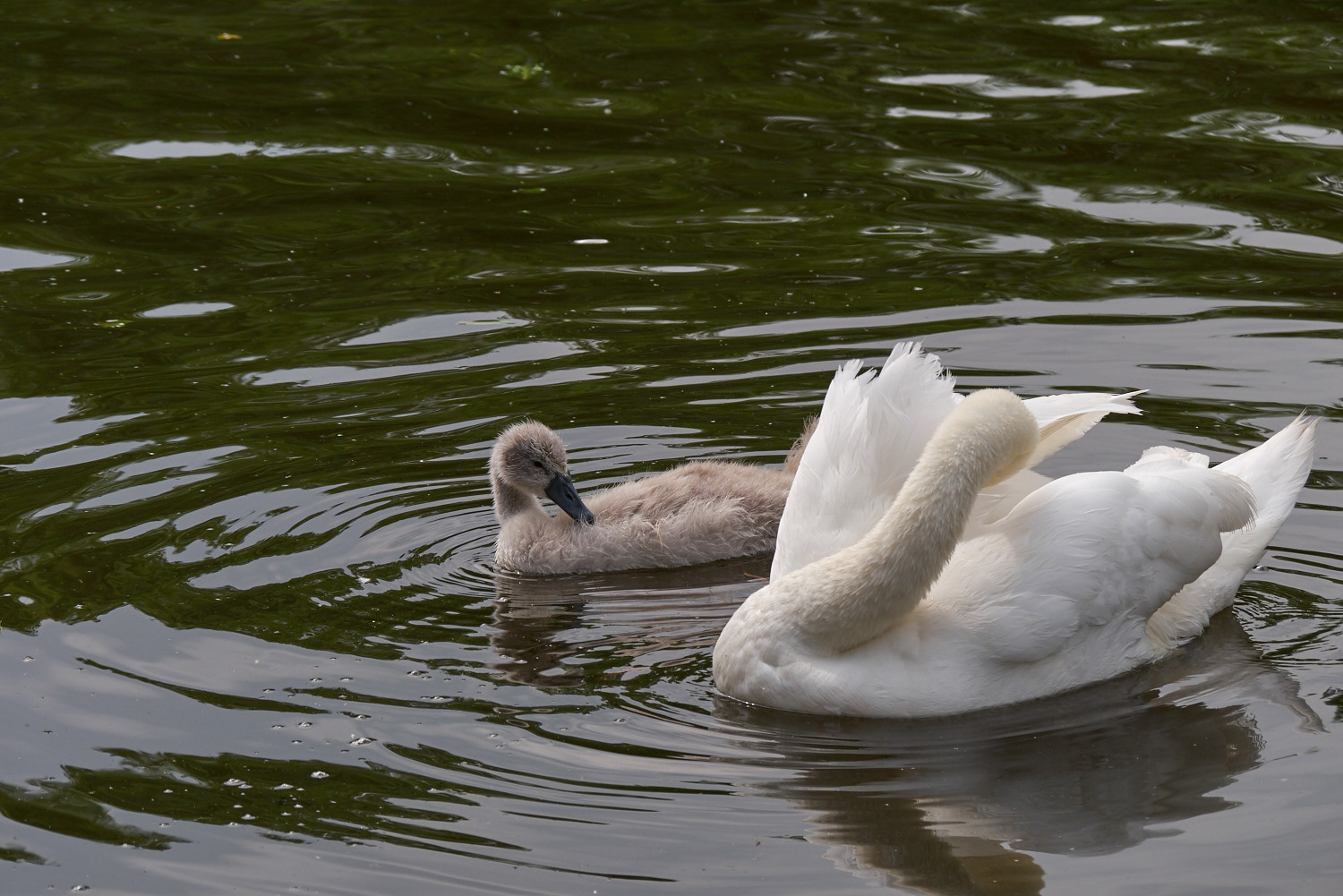
Every day there are attempts from neighbouring swans to drive off the local dominant swans.  Both pairs have one remaining cygnet each and the youngsters are usually driven off by the rival parents.  Their own parents are beginning to tire of them, too, and should soon be driving them away permanently.  Bidou, the black swan, also enjoys chasing both cygnets!  I think she's taking it out on them because their parents always send her packing!  Bidou has become very vocal recently and has taken to arriving at first light and 'trumpeting' outside our window to let us know she's here for an early breakfast.  We sometimes hear her calling from a distance as she makes her way towards her first port of call for the day - the feeding plank.  She's a favourite with most Taggs Islanders - we all wish she would find a mate as she seems so lonely at times.

Sunrise over Hampton Court bridge

Moonrise over trees on Taggs Island

Dave took this lovely image of moonrise on the night of full moon in early December.  We've had some cloudless frosty nights and I love to look at the silhouettes of the beautiful trees on the towpath and gaze at the moon and stars in a vast dark sky.
 

Mistle thrush sings its heart out

We've been wondering which bird was singing so sweetly over the Christmas period.  I thought that only robins sung in December but we've been serenaded for days by rival birds.  Today we were finally able to identify the songbird and I was surprised to discover that it was a mistle thrush.  Dave recorded its song so, if you'd like to hear it for yourself, just click on the arrow above.  While we were admiring it a rival turned up and there was quite a battle.  I'm not sure which of the two won the skirmish but shortly afterwards the victor was laying claim to the territory.